Using AI to redesign the Zelle enrollment flow
How developing a prompt engineering workflow drove a 30% increase in Zelle activations.
IMPACT
30%
increase in activations
2
screens eliminated from the flow
1
reusable prompt framework built
OVERVIEW
Problem
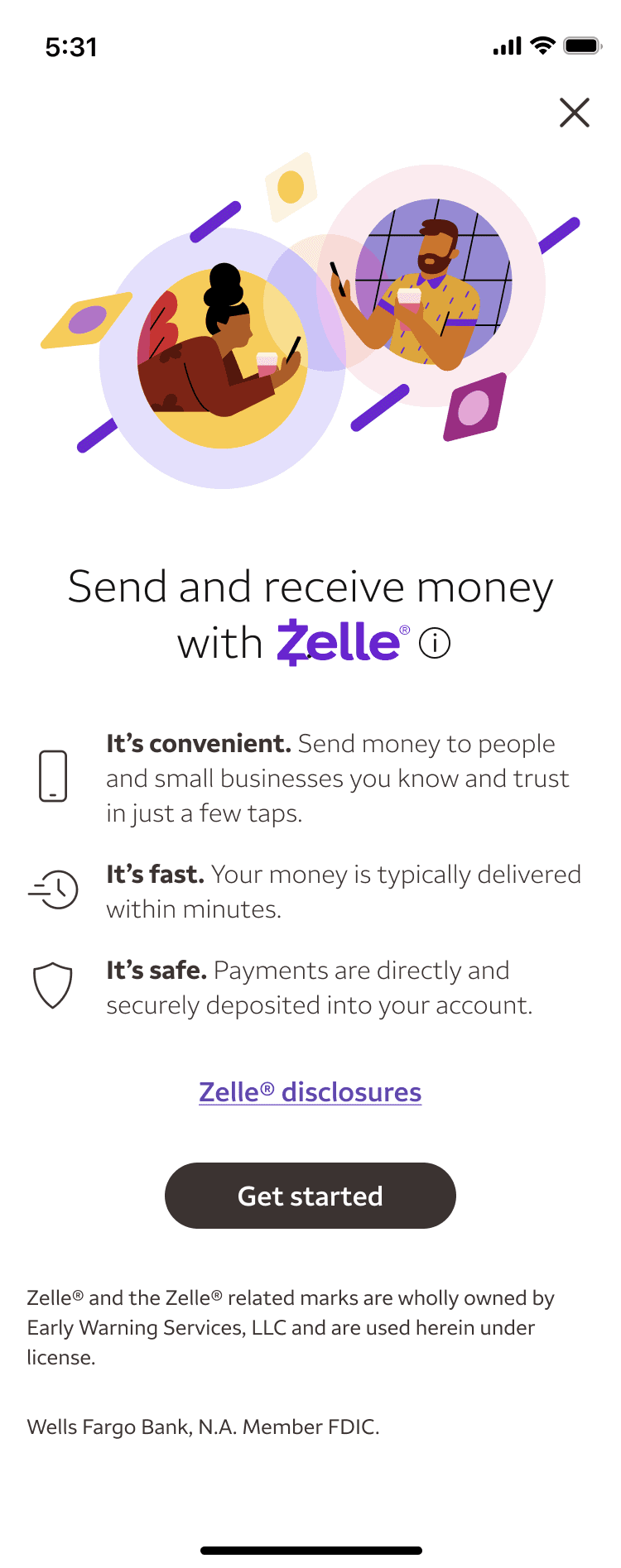
The Zelle enrollment splash screen was text-heavy, and the flow had abandonment issues at key steps. Token registration and terms and conditions acceptance required multiple screens and taps, leading to dropouts and reduced activations.
Users
Wells Fargo customers setting up Zelle for peer-to-peer payments.
Primary goal
Increase activations by reducing friction in the enrollment flow.
Secondary goals
Reduce the number of screens required to complete enrollment.
Constraints
EWS requirements around token registration language. Legal and Compliance requirements for terms and conditions. Co-branding requirements for the Zelle logo.
MY ROLE
Owned all UX copy
Rewrote enrollment screens to reduce friction, including the splash screen, token registration, and terms and conditions acceptance.
Consolidated screen content
Combined multi-screen steps into fewer screens while maintaining Legal, Compliance, and EWS requirements.
Developed a prompt engineering workflow
Built structured prompts to generate, stress-test, and evaluate copy candidates against compliance constraints and content standards. The process became a reusable framework for integrating AI into subsequent projects.
KEY DECISIONS
Cutting the splash screen to a single sentence
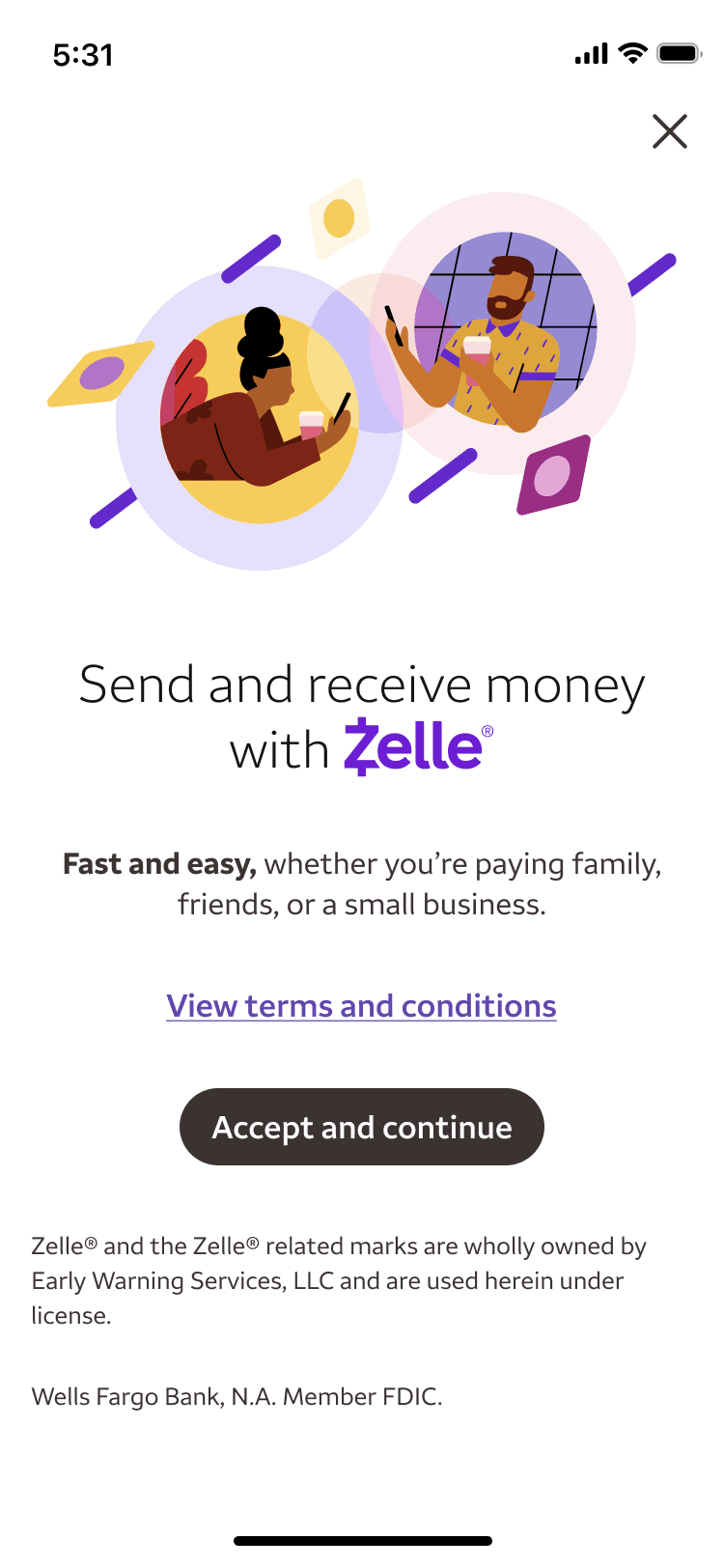
The original splash screen listed three bullet points explaining Zelle. I replaced it with a single sentence focused on the value proposition.
Rewriting the terms and conditions experience
Previously, terms and conditions required a full-screen modal. I moved T&Cs to the splash screen as a "View terms and conditions" link that opens a modal without leaving the page. The CTA is disabled until the user taps the link, then activates as "Accept and continue," tying agreement directly to the action of moving forward.
Consolidating setup into a single screen
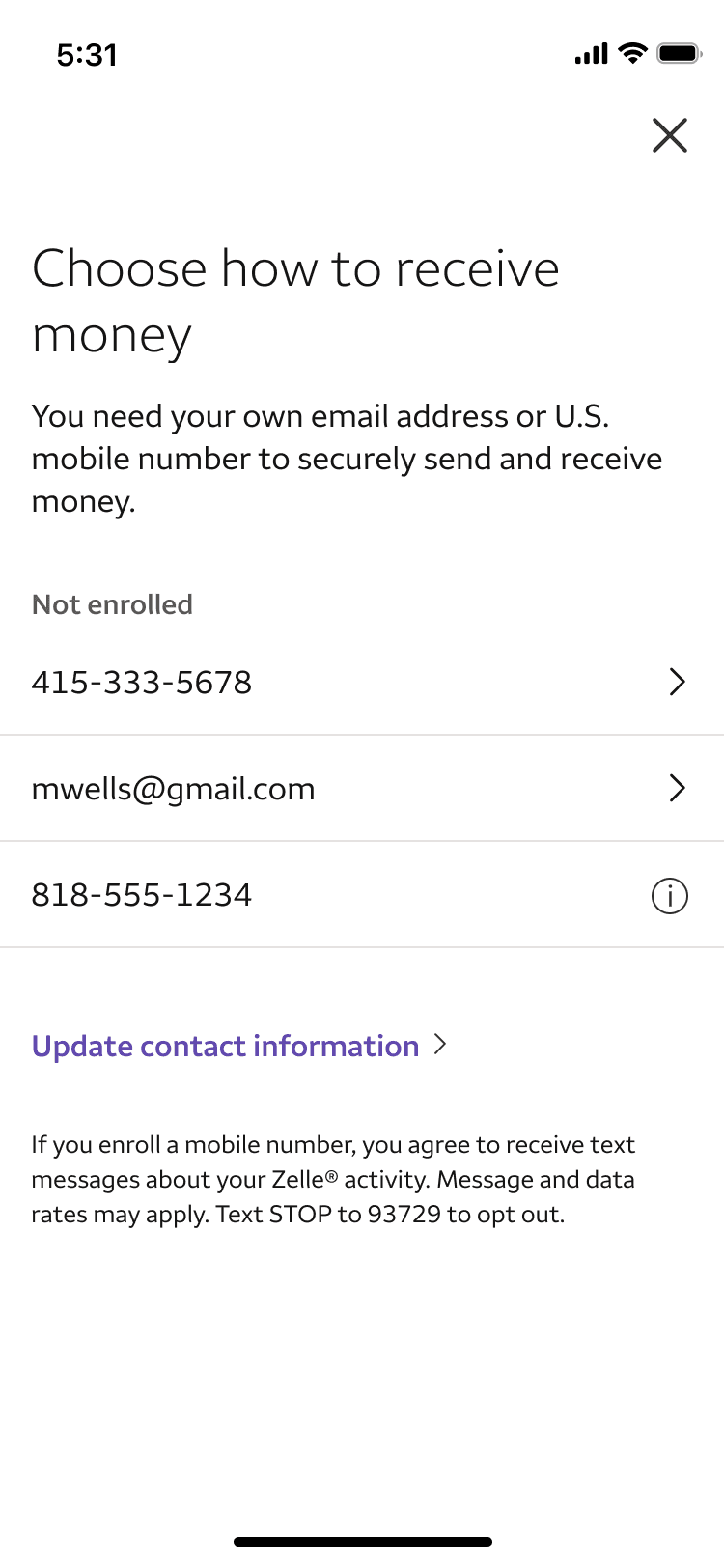
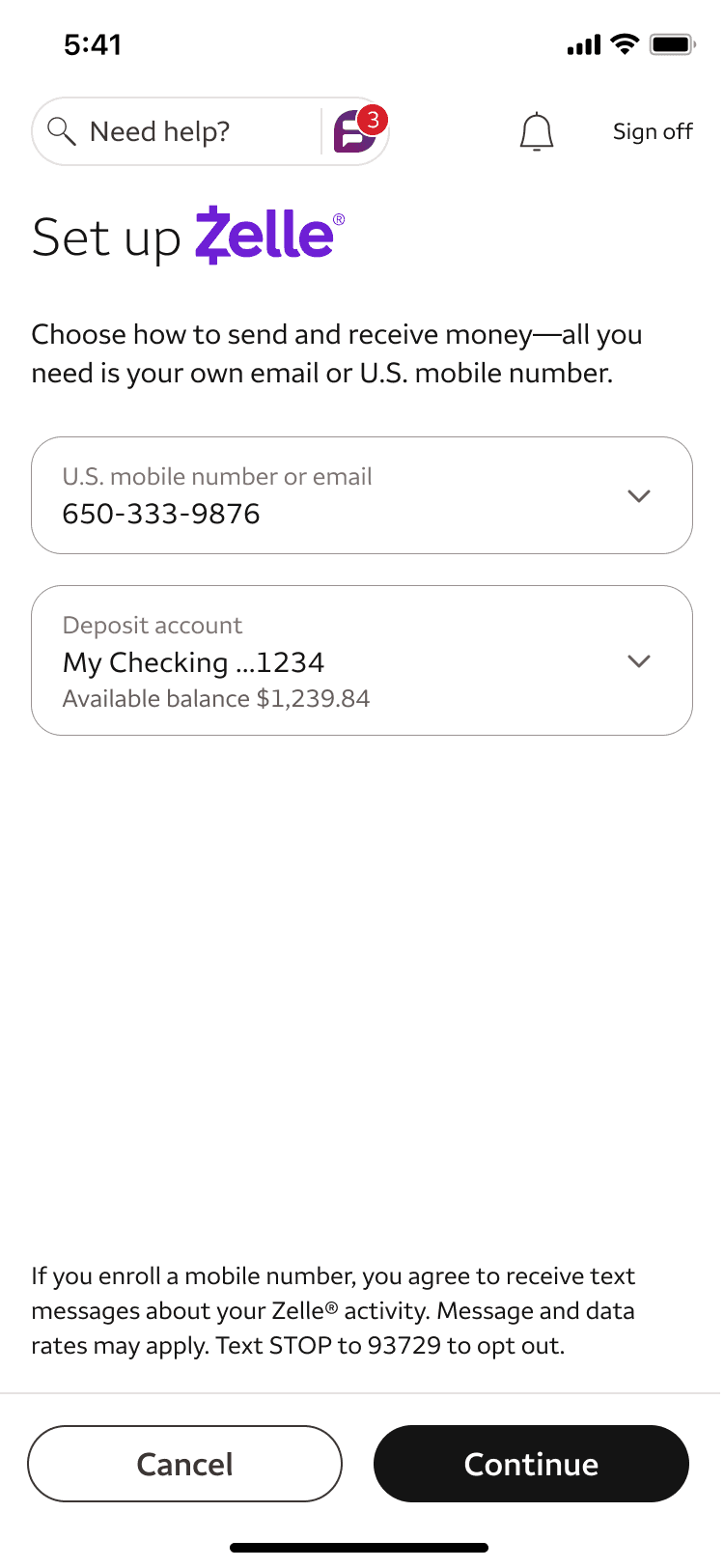
The old flow used full-screen modals for token registration and deposit account selection. I replaced those with a single Setup Zelle page that uses progressive dropdowns for registration and selection.
Encouraging immediate use after enrollment
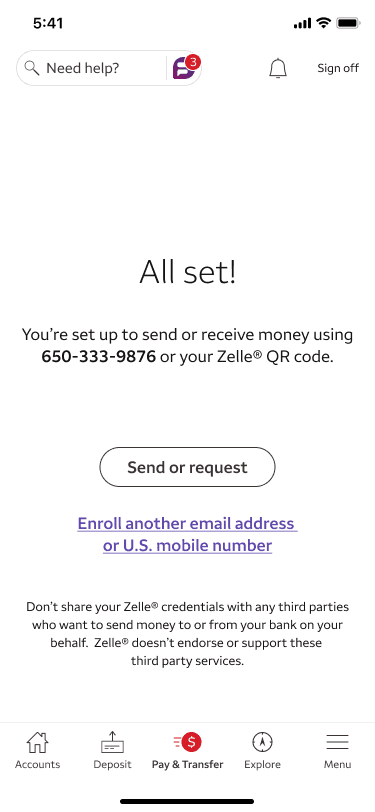
The previous confirmation screen CTA ("Done") was too passive and didn't encourage action. I rewrote the button copy to "Send or request" to push users toward immediate use rather than giving them a single option to exit the flow.
AI WORKFLOW
The challenge
The entry screen needed language that motivated first-time users to activate Zelle while remaining compliant with financial regulatory requirements. A narrow creative window where tone, clarity, and legal accuracy all had to land simultaneously.
Building a structured prompt
I used Copilot to systematically generate and stress-test copy candidates. Rather than asking for generic options, I built a structured prompt that embedded our voice and tone guidelines, compliance constraints, and the specific user context (new-to-Zelle customers seeing the feature for the first time). I then iterated on the prompt itself, adjusting the system instructions to control for reading level, emotional register, and regulatory language, evaluating each round of outputs against our content standards before selecting the final copy.
You are a UX writer at a large U.S. bank. Write 5 variations of a single-sentence value proposition for a peer-to-peer payments enrollment screen. This sentence replaces a three-bullet-point layout, so it must do the work of all three in one line. The audience is existing bank customers who have never used this feature.

Constraints:
- One sentence only, no line breaks
- Tone: confident, clear, conversational. Never banky or urgent
- Must not use "free," "instant," or "guarantee" (compliance)
- Must not imply the bank endorses any specific transaction
- Reading level: 6th grade or below
- The feature name and logo appear in the H1 above this sentence, so do not repeat the feature name in the body copy

For each variation, note which constraint was hardest to satisfy and why.
A reusable framework
A key part of the process was training Copilot on our voice and tone guidelines and content strategy so the outputs matched how we actually write at Wells Fargo, not generic UX copy. The copy that came out of this process drove the 30% increase in activations. The prompt template became a reusable tool that I adapted for subsequent projects, swapping in different compliance constraints and audience contexts to cut iteration cycles significantly.
THE OUTCOME
The redesigned enrollment flow reduced friction at every step, from a single-sentence splash screen to consolidated setup to a CTA that drives immediate use. Activations increased 30% and two screens were eliminated from the flow. The prompt engineering workflow I built is now part of how I approach every project.
© 2026 Brandon Fischetti